
-
Watch HOPE Summit 2026 Videos
HOPE Summit 2026 was filled with old friends reuniting, new friends being made, and of course, plenty of inspirational and informative sessions designed to help people live well with lung cancer.
For...
IN THE SPOTLIGHT
-
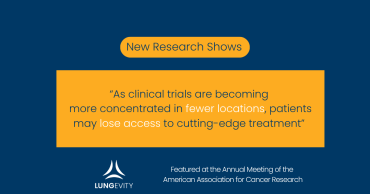
Clinical Trial Access Isn’t Expanding. It’s Concentrating.
Clinical trials show us whether a new treatment is safe and effective. They are also an important way for patients to access cutting-edge care. For trials to truly serve the lung... -
Podcast: Lung Cancer Diagnosis—What Happens Next
What happens after a lung cancer diagnosis? In this first episode of LUNGevity’s Lung Cancer Voices of Hope podcast, lung cancer survivor Lisa Bistline shares her experience, from... -
Podcast: Why Community Matters in Lung Cancer Care
Why does finding community matter in lung cancer care? In this episode, lung cancer survivor and advocate Jill Feldman shares her experience, from losing multiple family members to... -
Scalp Care, Shaving, and Head Coverings: Comfort Through Hair Loss
This video is a recording from a LUNGevity virtual meetup. Each month, we host multiple virtual meetups for those impacted by lung cancer to meet and connect with others who... -
Meet The “Mini-Organs” of Lung Cancer Research
Though many of us would like to deny it, our neighbors affect us. Their loud music disturbs our sleep. The scent of their dinner wafts through an open window. The sight of their... -
Progress in Cancer Care: What the Numbers Tell Us About Lung Cancer
Every January, the American Cancer Society releases a Cancer Facts & Figures report. It provides a clear view of where we stand in addressing cancer. The 2026 report brings both... -
Artificial Intelligence in Lung Cancer: Hope vs. Hype
Artificial intelligence (AI) is rapidly reshaping the future of cancer care, but such dramatic innovation also brings important questions. AI has evolved from early consumer tools... -

Biggest News from Berlin: Research Highlights from ESMO
Lung cancer research was in the spotlight at the European Society for Medical Oncology (ESMO) meeting held October 17-21, 2025, in Berlin, Germany. With approximately 30,000... -

ALK Virtual Meetup
ALK patients/survivors - Join us the 4th Wednesday of every month to connect with others who share common experiences and build your community.
Podcast: Making the Most of Your Healthcare Visits
Podcast: Making the Most of Your Healthcare Visits
How do you make the most of your visits with your healthcare team? In this episode, lung cancer survivor Bill Morris shares his experience with lung cancer and how he approaches his healthcare visits now. Oncology nurse practitioner Rasheda Persinger shares her insights after 20 years of working with patients. Hosts Ann and Dr. Shields discuss with Bill and Rasheda what they wish every patient knew, from writing down questions before an appointment to asking about biomarker testing to why…
Watch HOPE Summit 2026 Videos
Watch HOPE Summit 2026 Videos
HOPE Summit 2026 was filled with old friends reuniting, new friends being made, and of course, plenty of inspirational and informative sessions designed to help people live well with lung cancer.For the second year in a row, select sessions were recorded so those who could not attend are still able to access the valuable information shared.HOPE Summit 2026 Recorded Sessions Keynote: Wagons Roll with Dr. Ross Camidge Back in the Saddle: Reclaiming Strength and Living Well …
Podcast: Lung Cancer Diagnosis—What Happens Next
Podcast: Lung Cancer Diagnosis—What Happens Next
What happens after a lung cancer diagnosis? In this first episode of LUNGevity’s Lung Cancer Voices of Hope podcast, lung cancer survivor Lisa Bistline shares her experience, from initial scans and biopsies through multiple treatments, and the moment a later biopsy revealed a biomarker that led to a targeted therapy.Hosts Ann Steagall and Misty Shields, MD, PhD, then speak with Anne Chiang, MD, PhD, thoracic oncologist at Yale University, about what patients can expect at their first visit,…
Artificial Intelligence in Lung Cancer: Hope vs. Hype
Artificial Intelligence in Lung Cancer: Hope vs. Hype
Artificial intelligence (AI) is rapidly reshaping the future of cancer care, but such dramatic innovation also brings important questions.AI has evolved from early consumer tools (like autocorrect on phones, customer service chatbots, and personalized shopping recommendations) to advanced systems with the potential to revolutionize biomedical discovery and patient care. While there is tremendous excitement around AI, there is also a critical need to use it responsibly.Researchers are actively…
Biggest News from Berlin: Research Highlights from ESMO
Biggest News from Berlin: Research Highlights from ESMO
Lung cancer research was in the spotlight at the European Society for Medical Oncology (ESMO) meeting held October 17-21, 2025, in Berlin, Germany. With approximately 30,000 attendees from over 100 countries, this meeting gathered an international audience of clinicians, researchers, patient advocates, and representatives from the healthcare industry to discuss cutting-edge cancer research and share practice-changing clinical trial data. We saw data from studies that aim to build upon…
Surviving LMD: Michelle Never Settled for “No”
Surviving LMD: Michelle Never Settled for “No”
Michelle knew what was wrong. She knew the headaches, regular vomiting, ear popping, and “whooshing” sounds in her head were all signs of leptomeningeal disease (LMD). The issue, however, is that LMD is so rare—only diagnosed in 5% of people with cancer—she had to advocate for the testing to prove it.“I called my clinic and said I needed a brain MRI because I think I have LMD. They didn’t want to schedule one, so I said, tell my doctor I’m demanding a brain MRI. I can tell him directly if I…
Integrative Oncology and Lung Cancer: Adding Complementary Therapy
Integrative Oncology and Lung Cancer: Adding Complementary Therapy
What Is Integrative Oncology? Integrative oncology is the use of complementary therapies alongside conventional lung cancer treatments like chemotherapy, targeted therapy, surgery, or immunotherapy. Integrative oncology—also called integrative medicine—is an evidence-informed whole-body approach to health. It is often used to address symptoms and side effects caused by disease or treatment and improve overall quality of life. Specific examples of integrative oncology for lung cancer…
What Should Patients Know About Lung Cancer Surgery?
What Should Patients Know About Lung Cancer Surgery?
Surgery is a treatment option for early-stage lung cancer that involves removing all or part of a lung to treat a cancerous tumor. It is primarily an option for people with non-small cell lung cancer (NSCLC) staged at I, II, or IIIA. Surgery is rarely considered for tumors at stage IIIB or IV because those lung cancers have spread to other parts of the body. It is also rarely used to treat small cell lung cancer (SCLC) because SCLC is typically diagnosed at a later stage. Types of…
How Do We Treat Early-Stage NSCLC in 2025?
How Do We Treat Early-Stage NSCLC in 2025?
Roughly 20% of lung cancer is diagnosed as early-stage disease, and researchers have been working to improve treatment options for these patients—with significant success. Last September, as part of LUNGevity’s International Lung Cancer Survivorship Conference, we hosted a session on the progress in treating early-stage non-small cell lung cancer (NSCLC) with Dr. Jarushka Naidoo of Beaumont RCSI Cancer Centre in Ireland and Dr. Amy Moore of LUNGevity Foundation. In October,…
Real-World Examples of Patient Involvement in Designing Clinical Trials
Real-World Examples of Patient Involvement in Designing Clinical Trials
Read time: 2 minutes.Here we present the final video in our three-part series about how patients and researchers can work together to develop clinical trials. In the video below, LUNGevity again partnered with Rising Tide for Clinical Cancer Research to illustrate the power of having patients contribute to the research process. We use a real-world example to learn about patient-researcher collaborations through the POSITIVE study, a breast cancer-focused clinical trial. You can…
Developing Clinical Trials that Account for the Realities of Patient Life
Developing Clinical Trials that Account for the Realities of Patient Life
Read time: 2 minutes. We are pleased to continue our three-part series about how patients and researchers can work together to develop clinical trials. In this second video, LUNGevity again partnered with Rising Tide for Clinical Cancer Research to show how researchers and patient advocates can be empowered with tools to create clinical trials that resonate with patients and address the key issues they care about. If you missed the first video, How Can Patients…
The 5 Most Popular Lung Cancer Blogs From 2024
The 5 Most Popular Lung Cancer Blogs From 2024
Read time: 3 minutes. Throughout 2024 we published blogs sharing scientific meeting recaps, educational content, personal stories, treatment news, and so much more. Below are the most popular articles we published in 2024. If you’re looking for survivor features and personal stories, you can see all the lung cancer survivors we highlighted in 2024 right here. 2024 ASCO: Highlights of Lung Cancer Research In June, we recapped the annual American Society of…
Brain Mets Basics for NSCLC: What Are Brain Metastases and How Do We Treat Them?
Brain Mets Basics for NSCLC: What Are Brain Metastases and How Do We Treat Them?
Read time: 2 minutes. Brain metastases (also called brain mets) develop when cancer from somewhere else in the body spreads to the brain. Over time, tumors can become metastatic (travel to other parts of the body). When lung cancer travels to the brain, it requires specialized treatments that can cross the blood-brain barrier. The blood-brain barrier is a tight network of blood vessels and tissue that allows some substances, such as oxygen and water, into the brain while…
Screening and Early Detection of Lung Cancer: Highlights from WCLC and ESMO 2024
Screening and Early Detection of Lung Cancer: Highlights from WCLC and ESMO 2024
Lung cancer screening and early detection were major topics of discussion at the World Conference on Lung Cancer (WCLC), held in San Diego from September 7-10, and the European Society for Medical Oncology (ESMO) conference in Barcelona from September 13-17. This fourth and final blog in our series of updates summarizes highlights from these discussions. You can read the other update blogs from these fall science meetings: Metastatic NSCLC Highlights Small Cell Lung Cancer…
How Do Drugs Get Approved (and Fast-Tracked) by the FDA?
How Do Drugs Get Approved (and Fast-Tracked) by the FDA?
Read time: 5 minutes. This is Part 3 in our series on how drugs get approved to treat lung cancer. Part 1: Understanding Clinical Trials - Why Are They Important for Drug Development? Part 2: How We Define Success for a Clinical Trial The United States federal government aims to regulate prescription drugs to ensure people are receiving medication that’s safe and effective. Every prescribed drug in the U.S. has gone through a rigorous testing process that can…
How We Define Success for a Clinical Trial
How We Define Success for a Clinical Trial
Read time: 6 minutes. This is Part 2 of 3 in our series on how drugs get approved to treat lung cancer. Make sure to read Part 1 on the phases of clinical trials and why they are important for new drug development. We all want a treatment for lung cancer that is completely safe and entirely effective. While researchers are working toward that goal, the reality is we aren’t there yet. Every treatment we are considering comes with potential benefits and side effects. The…
Understanding Clinical Trials: Why Are They Important for Drug Development?
Understanding Clinical Trials: Why Are They Important for Drug Development?
Read time: 3 minutes.This is Part 1 in a 3-part series explaining how new drugs and treatments get approved to treat lung cancer. Parts 2 and 3 will be published in the coming weeks.Have you ever wondered how a new medicine or drug to treat lung cancer is brought to the people who need it? That’s what clinical trials help us do.According to the National Cancer Institute, a clinical trial is a type of research study that tests how well new medical approaches (such as screening tests, prevention…
Countdown to ILCSC24: Bringing the World’s Experts Right to Your Living Room
Countdown to ILCSC24: Bringing the World’s Experts Right to Your Living Room
Read time: 3 minutes. One of LUNGevity’s two flagship survivorship events, the International Lung Cancer Survivorship Conference (ILCSC), is being held virtually September 20 – 21, 2024. This is a free, online event that allows people with lung cancer and caregivers from around the world to join from the comfort of their own homes and hear from a star-studded lineup of lung cancer experts discussing the latest advances in research and treatment. You can register today for…
How Can Patients and Researchers Design Clinical Trials Together?
How Can Patients and Researchers Design Clinical Trials Together?
Read time: 2 minutes. Traditionally, people associate getting involved in lung cancer research with enrolling in a clinical trial. But most don’t realize they can also partner with researchers behind the scenes and get involved in designing clinical trials. In the first of a three-part series, Rising Tide Foundation for Clinical Cancer Research has partnered with LUNGevity to understand the role people with lung cancer can play in developing clinical trials. Through panelist…
Safely Bring Yoga, Dietary Supplements, Exercise, and More into Your Lung Cancer Journey
Safely Bring Yoga, Dietary Supplements, Exercise, and More into Your Lung Cancer Journey
Read time: 2 minutesIntegrative oncology adds holistic approaches—such as acupuncture, nutrition, exercise, and mindfulness—into a treatment plan. Research shows these interventions can have a tremendous impact on people going through lung cancer treatment and their quality of life. Unfortunately, they are also topics riddled with myths and falsehoods. LUNGevity spoke to an expert to help sort out the facts from the fiction. In the webinar below, Gabriel Lopez, MD, medical director of…
New Treatment Approved for Early-Stage ALK+ Lung Cancer
New Treatment Approved for Early-Stage ALK+ Lung Cancer
On April 18, 2024, the US Food and Drug Administration (FDA) announced the approval of alectinib to treat patients after surgical removal of ALK-positive non-small cell lung cancer (NSCLC).The approval is supported by data from the phase 3 ALINA trial, which showed that treating patients with alectinib reduced the risk of disease recurrence by 76% compared to treating them with chemotherapy.Alectinib is approved for use in patients with completely resected stage IB to IIIA ALK-positive NSCLC…
Chemo Shortage Didn’t Materialize ‘The Way We Initially Feared’
Chemo Shortage Didn’t Materialize ‘The Way We Initially Feared’
This March, LUNGevity Foundation partnered with CURE for their “Speaking Out” video series, inviting Amy Moore, PhD, vice president of global engagement and patient partnerships at LUNGevity Foundation, to discuss recent chemotherapy shortages. During the interview, Dr. Moore addressed the critical issues posed by the chemotherapy shortage, offering valuable insights into its origins, impact on people with lung cancer, available alternatives, and ongoing efforts to address disparities. Her…
From Leukemia to ALK+ NSCLC: Finding a New Way to Overcome Drug Resistance
From Leukemia to ALK+ NSCLC: Finding a New Way to Overcome Drug Resistance
Read Time: 5 minutes Approximately 4% of patients diagnosed with non-small cell lung cancer (NSCLC) will have their tumors test positive for an ALK biomarker. This means the ALK gene in the tumor cells has fused with another gene (most commonly EML4). This fusion produces a hyperactive ALK protein that causes cancer cells to grow and spread. Patients with ALK-positive lung cancer are often treated with a class of targeted therapies called TKIs (or tyrosine kinase inhibitors), which aim to…
Lung Cancer Masterclass: Get Smart About Lung Cancer
Lung Cancer Masterclass: Get Smart About Lung Cancer
In the past five years, the lung cancer community has seen an astonishing number of new treatments. As our understanding of lung cancer has deepened, the older treatment approaches have also become more effective and efficient. These options are fantastic steps toward improving the overall survival and quality of life for people living with lung cancer, but it can be difficult for patients and caregivers to keep track of the new drug treatments and scientific advancements. …
Questions to Ask About Clinical Trials
Questions to Ask About Clinical Trials
Asking your doctor and medical team questions about clinical trials is a helpful way to decide if they are a good fit for you. You may already have some in mind, but a few basic questions to ask and get answered before making a decision are:Do you know of any clinical trials for my type and stage of lung cancer?What are the benefits and risks of this clinical trial?What are the eligibility guidelines?How long does the study last?Will you still be in charge of my care?What are the costs, and…
Clinical Trial Phases
Clinical Trial Phases
The four phases of lung cancer clinical trials each serve a different and important purpose. From testing the safety of a new treatment to its effectiveness and long-term outcomes, this short video explains how researchers use clinical trials for new lung cancer treatments.Phases of a Clinical Trial:1. Safety of the new treatment 2. Does the cancer respond to the treatment 3. Is this new treatment better than the current options 4. Studies the long-term benefits and side effects
What Is a Clinical Trial
What Is a Clinical Trial
Lung cancer clinical trials are carefully designed research studies to evaluate and learn more about new drugs and treatments. They give people the ability to participate in lung cancer research and access to new treatments that otherwise may not be available to them, all under the close supervision of medical experts.
Watch Recorded Expert Sessions From ILCSC
Watch Recorded Expert Sessions From ILCSC
The International Lung Cancer Survivorship Conference (ILCSC) is a free virtual educational conference for people with lung cancer, caregivers, and advocates. The 2023 conference was held September 22-23. The recorded sessions from this conference are available to registered participants through December 21, 2023, at www.lungevity.org/ilcsc. If you did not register for the conference but would like to view the recordings, you may still register for free access. The recordings are…
Decentralized Trials: Bringing Clinical Trials Closer to the Patient
Decentralized Trials: Bringing Clinical Trials Closer to the Patient
While participating in clinical trials can provide substantial benefits to people with lung cancer, the resources required to do so may pose significant hurdles, especially to those who don’t live close to where trials are held, such as academic medical centers or major oncology network sites. Decentralized clinical trials remove some hurdles to trial participation for patients and are thus important for improving trial access for larger and more diverse groups of people. The U.S. Food and Drug…
Navigating Hope: How Comprehensive Biomarker Testing is Guiding Lung Cancer Care
Navigating Hope: How Comprehensive Biomarker Testing is Guiding Lung Cancer Care
Join us for a discussion on lung cancer biomarkers to learn what biomarker testing is, why it’s important, and how it can be used to optimize your treatment plans. We are thrilled to welcome our panelists: Balazs Halmos, MD, a thoracic medical oncologist from Montefiore Medical Center in New York; Elizabeth Ravera, a patient navigator at Montefiore; and a patient living with lung cancer who tested positive for the ALK biomarker. The panel is moderated by LUNGevity's Amy Moore, PhD, VP of Global…