Highlights of AACR 2024: Where the Laboratory Meets the Patient

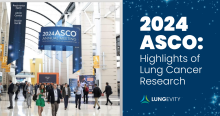
Read time: 7 minutes It’s spring! The daffodils bloom, the days become longer, and I attend the annual meeting of the American Association for Cancer Research (AACR). For those of you who are new to this meeting, it is the largest gathering of laboratory scientists and clinicians in the world—coming together to discuss how to take science from the bench (laboratory) to patients and communities. This year’s meeting was held in sunny San Diego and brought together more than 23,000 attendees. Below I summarize key meeting highlights that are of interest to the lung cancer community. Lung Cancer

Cancer Grand Challenges Summit 2024: No Time to Waste in Addressing Some of Toughest Challenges in Cancer

Read time: 4 minutes I just returned from the Cancer Grand Challenges Summit, held March 5–8, 2024 in London, England. Cancer Grand Challenges was launched in 2020 as a collaboration between Cancer Research UK and the National Cancer Institute in the US, whereby they provide $25 million to international, multi-institutional teams working to address some of the most perplexing issues in the cancer field. I am LUNGevity’s representative on Team CANCAN, which is working to understand and treat cancer cachexia, the extreme loss of muscle and fat tissue (often called “wasting”) that often occurs in

Leveraging Genetics to Understand Why Younger Adults Are Developing Lung Cancer

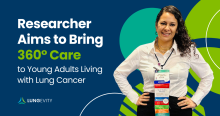
Read Time: 5 minutes It’s a mystery that has been baffling researchers: Why do some people develop lung cancer in their 20s or 30s? While we used to think lung cancer was only caused by exposure to tobacco and environmental factors like radon, researchers are starting to learn that the development of lung cancer, particularly in younger adults, could have a hereditary component. LUNGevity partnered with the Lung Cancer Initiative, a leading nonprofit in North Carolina, to support research into this space by awarding one of our 2023 Career Development Awards to Jaclyn LoPiccolo, PhD, MD

From Leukemia to ALK+ NSCLC: Finding a New Way to Overcome Drug Resistance

Read Time: 5 minutes Approximately 4% of patients diagnosed with non-small cell lung cancer (NSCLC) will have their tumors test positive for an ALK biomarker. This means the ALK gene in the tumor cells has fused with another gene (most commonly EML4). This fusion produces a hyperactive ALK protein that causes cancer cells to grow and spread. Patients with ALK-positive lung cancer are often treated with a class of targeted therapies called TKIs (or tyrosine kinase inhibitors), which aim to target the effects of the hyperactive protein and stop tumor growth. However, ALK-positive lung cancer is

LUNGevity Announces $1.2M in Lung Cancer Workforce Development Research Awards

LUNGevity Foundation is proud to announce the recipients of four awards to bolster the lung cancer research workforce— the Career Development Award, the VA Research Scholar Award, the Health Equity and Inclusiveness Research Fellow Award, and the ASTRO-LUNGevity Residents/Fellows in Radiation Oncology Seed Grant. “Progress in lung cancer research is only possible with a vibrant and diverse thoracic oncology workforce,” notes Upal Basu Roy, PhD, MPH, executive director, LUNGevity Research. “We have to maintain a pipeline of excellent researchers from a diverse range of backgrounds to create

Treatment & Research Takeaways: ESMO 2023 Meeting

The European Society for Medical Oncology (ESMO) recently held its annual conference from October 20 – 24, 2023 in Madrid, Spain. ESMO represents one of the largest gatherings of the international oncology community, and this year’s meeting had over 30,000 registered attendees from around the world. Though October 19th brought record rainfall to Madrid, breaking a 100-year record, the rain in Spain didn’t dampen the palpable excitement of this year’s meeting. This was an especially exciting ESMO because there were a number of important lung cancer presentations that represent practice-changing

Innovative Therapeutic Vaccine for ALK+ NSCLC Heads to Phase 1 Clinical Trial

Different types of lung cancer are known to be caused, or driven, by alterations in genes such as EGFR or ALK. One such alteration, the fusion of the ALK gene with another gene (usually EML4), occurs in approximately 5% of patients with non-small cell lung cancer (NSCLC). Over the past several years, tyrosine kinase inhibitors (TKIs) have been approved to treat advanced ALK-positive lung cancers and may have fewer side effects with improved quality of life for patients. However, as with most TKI treatments, eventually ALK-positive tumors are likely to develop ways to grow, despite treatment

What Is a Clinical Trial

Lung cancer clinical trials are carefully designed research studies to evaluate and learn more about new drugs and treatments. They give people the ability to participate in lung cancer research and access to new treatments that otherwise may not be available to them, all under the close supervision of medical experts.

Watch Recorded Expert Sessions From ILCSC

The International Lung Cancer Survivorship Conference (ILCSC) is a free virtual educational conference for people with lung cancer, caregivers, and advocates. The 2023 conference was held September 22-23. The recorded sessions from this conference are available to registered participants through December 21, 2023, at www.lungevity.org/ilcsc. If you did not register for the conference but would like to view the recordings, you may still register for free access. The recordings are available until December 21. The recordings provide opportunities for attendees to hear from world-renowned

The Latest Lung Cancer Science: Highlights of WCLC 2023

I had the privilege of attending the 2023 World Conference on Lung Cancer (WCLC) in Singapore with my colleague Dr. Bellinda King-Kallimanis. WCLC, the world's largest meeting dedicated to lung cancer and other thoracic malignancies, is an excellent forum for learning about the latest research into the early detection and treatment of lung cancer. Apart from the science, it was inspiring to see fellow advocates and network with brilliant researchers, all razor-focused on improving the outcomes and lives of people diagnosed with lung cancer. Major highlights of the meeting are summarized below